Illuminate Your Staircase Void with Acrylic Ring LED Chandelier
Looking to light up that awkward, empty space above your stairs? An acrylic ring LED chandelier can be a really smart choice. They offer modern aesthetics, great light, and are often surprisingly versatile. Instead of just hanging a standard fixture, you get something that’s designed to fill vertical space effectively while providing ample illumination.
When you’re staring up at that multi-story void above your staircase, a lot of lighting options just don’t quite cut it. Standard flush mounts look tiny, and traditional chandeliers Woyik can sometimes feel too heavy or fussy for modern homes. This is where acrylic ring LED chandeliers really shine. They’re built for impact.
Modern Appeal
Acrylic ring chandeliers tend to have a contemporary, sleek look. The clean lines and often minimalist design fit well with modern and transitional interiors. They don’t clutter the space visually, even large ones, because of their open design and light-transmitting materials.
Excellent Light Distribution
Unlike a chandelier with many small bulbs, LED rings often provide a more even and diffused light. This is crucial in a stairwell where you want to illuminate both the stairs themselves and the surrounding walls without creating harsh shadows or blinding glare. The light often spreads out more uniformly, making the whole area feel brighter and more inviting.
Lightweight Construction
Acrylic is significantly lighter than glass or crystal. This means larger fixtures can be installed without the same structural concerns you might have with a very heavy traditional chandelier. Lighter fixtures are often easier and safer for electricians to install at height, which can be a real consideration in a tall stair void.
Durability and Maintenance
Acrylic is less prone to chipping or breaking than glass, making it a more durable choice, especially in busy household areas. It’s also relatively easy to clean with a soft cloth and mild cleaner, which simplifies maintenance – a big plus for a fixture that’s hard to reach.
Key Considerations When Choosing
Before you jump into picking the prettiest one, there are a few practical aspects to think about. A little planning here will save you headaches later.
Size and Scale
This is probably the most important factor. A chandelier that’s too small will look lost, and one that’s too large can overwhelm the space.
Ceiling Height
Measure your ceiling height from the top of the stairs. As a general rule, you want the bottom of the chandelier to be at least 7 feet above the highest step or landing. This ensures head clearance and allows the light to spread effectively.
Void Dimensions
Look at the width and depth of the stair void. The chandelier shouldn’t feel jammed into the space. Consider the overall volume of the void and choose a fixture that feels proportionate. Multi-ring designs can be particularly effective in filling a tall, narrow space without being too wide.
Number of Rings and Orientation
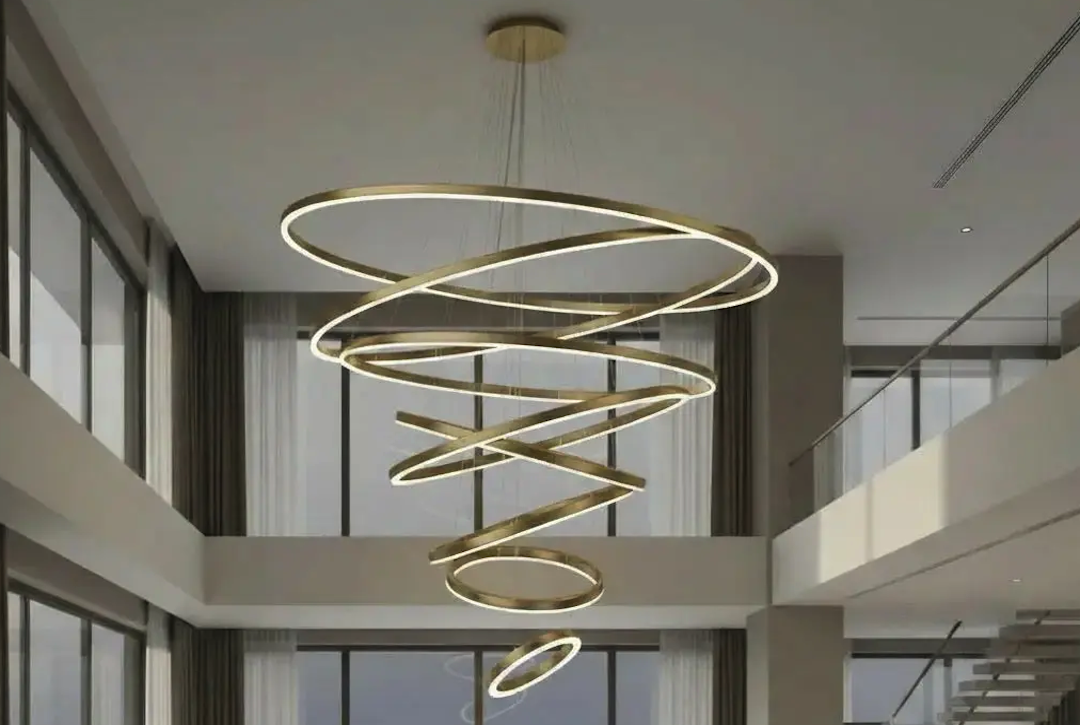
Some designs feature a single large ring, while others have multiple rings of varying sizes, often arranged in a cascading or sculptural manner. A cascading design can be excellent for vertical voids, creating a sense of movement. Consider whether you prefer horizontal rings, angled rings, or a mix.
Light Output and Color Temperature
LED lighting offers great flexibility here. You want enough light, but not too much, and the right “feel” for your home.
Lumens Required
For a stairwell, you generally want good illumination for safety and aesthetics. The number of lumens you need will depend on the size of the void and whether this is the primary light source. Look for chandeliers that specify their lumen output. As a rough guide, a stairwell often benefits from 1,500 to 3,000 lumens, depending on the space’s overall brightness and other light sources.
Color Temperature (CCT)
LEDs come in various color temperatures, measured in Kelvin (K).
- Warm White (2700K-3000K): Creates a cozy, inviting atmosphere, similar to incandescent bulbs. Good for residential spaces.
- Neutral White (3500K-4000K): A balanced light, good for task lighting or areas where you want natural-looking illumination.
- Cool White/Daylight (5000K-6000K): Brighter, more energetic light. Can feel institutional if not used carefully in a home setting.
For most homes, a warm to neutral white is generally preferred for a stairwell. Some fixtures offer adjustable CCT, which can be a nice feature.
Dimmability
A dimmable chandelier is a significant advantage. It allows you to adjust the light level for different times of day or moods. You might want bright light for safety during the evening, but a softer glow as ambient lighting. Ensure the chandelier is explicitly stated as dimmable and that you have a compatible dimmer switch installed.
Design and Aesthetic Elements
Beyond the practical, the visual impact is a huge part of choosing a chandelier. This is where personal taste comes into play, but it’s still good to understand the options.
Ring Shape and Arrangement
While the name implies “rings,” these aren’t always perfectly circular.
Circular Rings
The most common, offering a classic yet modern look. Multiple circular rings can be arranged concentrically, staggered, or in a free-form cascading pattern.
Oval or Irregular Shapes
Some designs feature oval rings or even more abstract, organic shapes. These can add a bespoke, sculptural quality to the space.
Stacked vs. Cascading
- Stacked: Rings are typically arranged horizontally, one above the other, often suspended by multiple wires. This creates a bold, geometric statement.
- Cascading: Rings are suspended at varying heights, creating a dynamic, flowing effect that emphasizes the verticality of a stair void. This is particularly effective for very tall spaces.
Finishes and Hardware
The metal components suspending the acrylic rings also contribute to the overall look.
Popular Finishes
- Chrome/Polished Nickel: Offers a shiny, reflective, contemporary feel.
- Brushed Nickel/Satin Chrome: A softer, more understated metallic look.
- Matte Black: A popular choice for industrial or very modern aesthetics, creating a strong contrast.
- Brass/Gold Tones: Can add a touch of warmth and sophistication, good for slightly more opulent modern or transitional styles.
Consider how the finish will complement existing hardware, railings, or other light fixtures in the vicinity.
Material Quality (Acrylic)
Not all acrylic is created equal. While it’s a durable material, transparency and finish can vary.
Clear vs. Frosted Acrylic
- Clear Acrylic: Offers maximum light transmission and a crisp, modern look. The LEDs might be more visible.
- Frosted Acrylic: Diffuses the light more softly, reducing glare and often creating a more ethereal glow. It also helps obscure the individual LED points.
Look for high-quality acrylic that’s clear (if chosen) and free of blemishes. Cheaper acrylic can yellow over time or appear cloudy.
Installation and Maintenance Specifics
Putting a light fixture in a stair void isn’t always straightforward. Being aware of the challenges can help you plan appropriately.
Professional Installation is Key
Given the height and often complex wiring (especially with multi-ring fixtures), professional installation by a licensed electrician is highly recommended. They have the right equipment (ladders, scaffolding) and expertise to ensure the fixture is safely and securely mounted.
Adjusting Suspension Wires
Many acrylic ring chandeliers are suspended by thin wires that allow for height adjustment. This is critical in a stair void to achieve the perfect hanging level and ensure the rings are visually balanced. Your electrician will typically do this during installation. Some designs allow for individual ring height adjustment, offering more customization.
Cleaning and Care
As mentioned, acrylic is relatively easy to clean.
Routine Dusting
A soft, dry microfibre cloth is usually sufficient for routine dusting.
Deeper Cleaning
For fingerprints or smudges, use a soft cloth dampened with a mild, non-abrasive cleaner diluted with water. Avoid harsh chemicals, ammonia-based cleaners, or abrasive sponges, as these can scratch or damage the acrylic. Always refer to the manufacturer’s cleaning instructions.
Beyond the Aesthetic: Energy Efficiency
This is a practical benefit that often gets overlooked in the excitement of design.
LED Longevity
LEDs are known for their incredibly long lifespan, often tens of thousands of hours. This means less frequent bulb changes, which is a major advantage for a fixture that’s difficult to reach in a stairwell. Maintenance is reduced significantly.
Lower Energy Consumption
LEDs consume considerably less energy than traditional incandescent or even fluorescent bulbs for the same light output. This translates to lower electricity bills, which is a tangible benefit over the lifespan of the fixture. While the initial investment might be higher than a conventional fixture, the long-term savings in energy and maintenance can make them a very economical choice.
Is an Acrylic Ring Chandelier Right for Your Stair Void?
Ultimately, the decision rests on your specific needs and preferences. If you’re looking for a modern, impactful lighting solution that efficiently illuminates a tall vertical space, offers excellent longevity, and is relatively easy to maintain, then an acrylic ring LED chandelier is definitely worth serious consideration. They provide a strong visual statement without being overly ornate, offering a blend of contemporary style and practical functionality that’s well-suited to the unique challenges of a staircase void. Take your time, measure carefully, and consider the practicalities alongside the aesthetics to find the perfect fit for your home.